WHY SOAR?

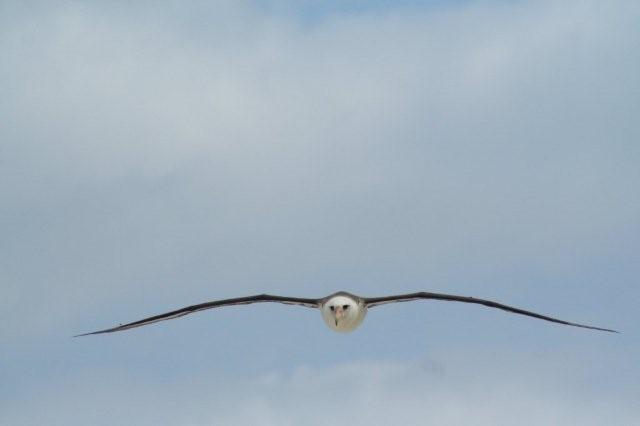
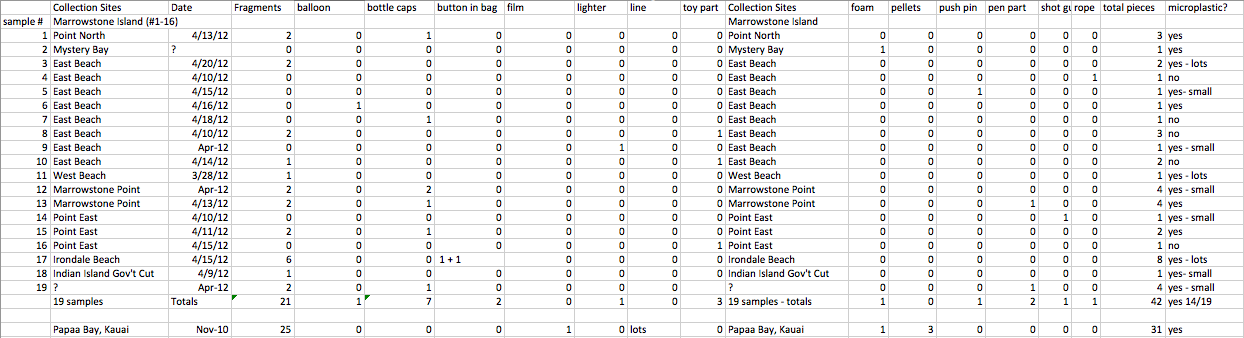
SOAR has a serious side in its missions to help kids find ways of helping the ocean and watersheds throughout the world. I started on having seen hundreds of albatrosses killed by plastic debris at Pihemanu (Midway Atoll). I was inspired by the questions of young people in Ohio and by USFWS biologists working hard to protect endangered species and damaged habitats.


SOAR has a very fun and tough to define side.....thanks to FRED AND FRIENDS, Project SOAR helps with watershed and ocean workshops throughout the world, and generally makes people smile while they learn some tough stuff about how we treat our rivers, streams, lakes, ponds, and the one ocean on planet earth..........

INVITING SOAR INTO YOUR SCHOOL, ORGANIZATION, AND COMMUNITY

SOAR is a way you can introduce young people to ways they can make a difference in their local community and the wider world.

Take advantage by:

1) Invite Ron Hirschi as a guest author in your school or speaker for your organization. Ron has many years experience as an author and as a biologist. SOAR adds another dimension to his list of hands on projects he shares in writing, art, and ecology workshops in schools around the world.

Many schools invite Ron for his work as author of more than 50 nonfiction books, including many with ocean themes. Others bring him to school as a scientist or artist, but the best fit is always when schools use Ron to help them integrate curriculum.

Tom Bates, Principal at Tremont Elementary in Ohio recently said in an interview following Ron's visit, "What stood out to me was how Ron was able to gear his activities and discussion and information to it was meaningful to the students, whether they were in kindergarten or fifth grade."

Be in touch at whalemail@waypoint.com for visit information.

2) SOAR now has ONLY ONE Fred traveling the globe along with a Laysan Albatross "Friend of Fred". This duo is packaged with a box full of ideas, activities, information about Papahanaumokuakea, ocean debris, and other materials your students will love to study. Also included is a journal chronicling Fred's adventures, all of which began when kids at Columbus School for Girls (CSG) learned how they could take action to help the ocean.

Currently, this treasured package is in the hands of Debbie Charna and her students at CSG.

Debbie and the girls will add to the package and select ONE destination from any of you getting in touch in the coming weeks. The package will then be sent to the new destination where students can take time to choose projects of their own, adding to the many already taking place around the world.

To add your school or organization to the list of potential destinations, whalemail@waypoint.com .


NOTE: You might also be lucky enough to receive one of the earlier packages with a FRED and Friend, already traveling. To date, Fred has visited many countries. The SOAR co-creators at CSG are at work on a map to share these locations and a brief note on SOAR projects in Australia, Switzerland, Israel, England, The Dominican Republic, and in the United States. Be watching for more as our new package begins to travel soon!

17 February 2012

FRED RETURNS TO THE PACIFIC NORTHWEST. JUST IN TIME!


Fred and Friend (Laysan Albatross from Kilauea on Kauai)
returned to the Pacific Northwest this week.

Fred has been with students in Ohio and will now
help many people focus on marine debris in the Pacific Northwest, first
with kids from Susan Barrett's North Kitsap High School Transitions class
and
students at many grade levels at Bush School in Seattle.

Contents of his Teaching Kit were enriched
by Debbie Charna's students. The Pacific Northwest additions
will include results of beach cleanups, study of all forms of marine
debris, including toxins from treated lumber, and the responses
NK and Bush kids add as they consider earlier SOAR projects.

THANK YOU OHIO
for all you have done to enhance learning
here in the Pacific Northwest. It is late winter 
and our beaches are now receiving their annual high doses of marine debris
from inland waters. At the same time, erosion of many beaches is accelerating
due to poor protection of coastal riparian habitat
and a diminishing amount of large woody debris (natural wood that acts to buffer
the shoreline from wind driven waves). 

We also hear from our friends at NOAA
that marine debris from the Japanese tsunami will arrive on our shores
at any time. 

We will keep everyone posted as results of our beach cleanups and research
continue to expand.   

08 February 2012

WISDOM


John Klavitter, USFWS, holding an albatroos, ready for banding.


I took this photo on Midway in 2009 when I first learned about Wisdom.

Since that time, I've worked on a book about her while teaching kids around
the world about albatross issues, especially dealing with plastic that kills so many of them.

I learned yesterday, that someone else has gotten a book out about Wisdom and so,
I have to rethink what I will do with all the information so many have provided and
that I've written about Wisdom, albatrosses, and ocean problems.

I'm posting this image of John to thank him for his many kindnesses as I've
worked on Project SOAR with kids.......He has helped in so many ways
and is the one person I am calling WISDOM'S KEEPER..........

One who cares so deeply and never asks for much in return, like
the kids who originally inspired what I do.........The kids of CSG and
other schools around the planet who are trying to find ways of
helping the ocean.

Maybe I will write a book called Wisdom Keepers. For John.

And, by all means, check out the new book,
Wisdom, The Midway Albatross.

I hope it is a good book and helps Wisdom in ways needed by all ocean creatures.

Malama i ke kai.

01 February 2012

Palau Sea Turtle Story Shell


honu ea photographed at Marrowstone Point. 2012.

My cousin Tom Rice introduced me to the science of the oceans when I was quite young. I collected sea shells for his Of Sea and Shore Museum. At the time of its opening, it was the largest collection in the United States and is still open in Port Gamble, Washington.

Tom recently moved to Thailand and scaled back the museum's displays. I inherited some treasures when he moved, including this Honu Ea or Hawksbill Turtle "shell"........The carapace of this beautiful sea turtle is etched with a story from Palau...........Tom brought it home from one of his many travels around the world and has since forgotten the legend or folk tale being told in the many etchings on each of the "Moons" or shields on the turtle back.

Each of these pieces of the back fit together like a puzzle and over the years, they have slipped apart a bit so that it is difficult to transport and share in my workshops about marine debris.

But as a piece falls out of the back, I can carefully hand it to a child so they can hold it to light and see the beauty of the transparent shell............No wonder people killed these creatures for the shell, turning them into sunglass frames, jewelry, and other fashion pieces..........

Ironically, the shell is a kind of pre-plastic and today, the turtles, like so many sea creatures, suffer from entanglement in nylon netting, fishing line, and other debris. Saved from harvest, they now must swim seas filling fast with plastics created to replace the more natural shell and other materials of earlier times.

I wonder if people of Palau would want this turtle returned.

If you know anything about picture stories etched into these shells, do let me know. I have also put out a question to list serves and so, will keep posting any information. In the meantime, I will bring this to all my presentations in coming years...........Kids are so inspired and enchanted on holding and touching and imagining this sea turtle's past. They seem more eager to help the turtles and the ocean on experiencing the gift from Palau!

29 January 2012

Project AWARE --- Taking More Action to Clean the Seas Beneath the Surface

For those of you who dive or know someone who does, please share the following:

Project AWARE is adding more enthusiastic ways people can get involved in cleaning the seas AND in educating others about marine debris, especially the tons of trash beneath the surface. They are moving away from those single day dives to do a cleanup. To learn more visit their site:

 http://www.projectaware.org/


The Project AWARE website offers divers some tools and information kits for collecting data on marine debris and for educating people about sharks, as well as posting events in which divers can participate.

from that website:

"Project AWARE Foundation is a growing movement of scuba divers protecting the ocean planet – one dive at a time.

"Over the past two decades of underwater conservation we’ve learned that divers are true leaders in ocean protection. We’re ocean heroes numbering in the millions across the globe. We believe together our actions will make a huge impact and will help to rescue the ocean.

"With new programs and more online resources than ever before, Project AWARE supports an unprecedented global movement of divers acting in their own communities to protect oceans and implement lasting change.

"We’re focusing in on two major ocean issues –Sharks in Peril and Marine Debris, or trash in our ocean. Truly, there are many conservation issues converging on our ocean planet at once, but we’re concentrating on these serious problems where scuba divers are uniquely positioned to directly and positively affect real, long-term change in these two areas."

25 January 2012

FRED FOR PRESIDENT and a LINK TO CURRENT ARTICLE ABOUT SOAR

Apparently, Fred did the research and has all his background checks ready for inspection, but wanted all of you to know before news leaked to the media...........

Fred is running for President! His single campaign issue? Malama i ke Kai........Protect and Care for the Ocean!!!

And, get this, he's running as a Republican. He listens to John Prine A LOT and loves the line,,,,,,,,,,,,Grampa voted for Eisenhower because Lincoln won the war.............and, truth be told, Fred will run as a Republican to draw votes away from challengers, knowing his good buddy, Barack Obama will win if Fred tosses his lei into the ring!!!!

And, just in time for the candidates first appearance, there is a great new article about PROJECT SOAR in the December issue of CURRENT, The Journal of Marine Education. Here is a link to that article, provided by Columbus School for Girls. you will have to visit this site, then go over to the right hand side and click on the article..........

http://www.columbusschoolforgirls.org/news/detail.aspx?pageaction=ViewSinglePublic&LinkID=3395&ModuleID=141&StartDate=12/8/2011


Be in touch for more information about Fred's travels this spring. He is headed into new territories, ready to explore and study and help inspire others to take care of the ocean.


16 January 2012

Clean Energy Solutions Lecture by Vicki Osis..........

I am sharing this with all of you. Since I can't post a multiple page document it is all printed here.


Vicki OSIS .... and Thanks so much for your interest. You give me hope.

There is consensus among scientists that we can no longer halt climate change but can only work to slow its progress and lessen its impacts.

• Our current situation, C02 concentrations in the atmosphere are at their highest levels since 1961 when the announcement was first sent out by Charles David Keeling, who produced data showing that carbon dioxide levels were rising steadily in what became known as the "Keeling Curve".

• The US has not signed the last three IPCC protocols to reduce emissions and currently has no national policy to reduce emissions.


James Hanson, head of the NASA Goddard Institute for Space Studies notes that if we replace all our coal fired electric power plants with emission free energy sources we can reduce C02 emissions enough to save us from the worst effects of climate change. (there are 600 coal plants in the US) We must act now as we have only 10 years left to try to slow C02 emissions to levels that will reduce the worst effects of climate change. (he made his statement in 2010) Hanson goes on to say “It is extremely irresponsible to make the assumption that efficiency and renewable energy sources are all that will be needed to save us from the worst of climate change and will provide the energy to run our nation.


Solution: 1. Our biggest need is a public who is aware of the risks that we are facing by not reducing out C02 emissions! We need a public that is willing to speak out and demand change. Only with a knowledgeable public can we bring pressure to bear on our governmental officials to make the transition away from coal and oil as our main energy sources.


Solution 2. We need to use every possible emission free source of energy we have and demand that funding be made available to do the research to develop the high intensity energy sources we need. Some experts say it will take an effort comparable to the effort to put a man on the moon or maybe a better comparison is the effort and dollars we put into winning the 2nd world war.


Solution 3. The public needs to know the risks and drawbacks with each energy choice and be able to make intelligent choices based on the best information that scientists can provide.


Solution 4. Switching to electric cars. Electric cars are now on the market. Since we do not shut down our electric generating plants at night, by recharging the cars at night, energy will be available to meet the recharging demand. We must develop a public who is willing to transition from a gas powered cars to electric.


The following provides information about the energy choices we currently have and the pluses and drawbacks of each.


Comparison of the generating capacity of green energy compared to nuclear energy.

Power generated by a power station is measured in multiples of watts, megawatts (10 to 6th watts or gigawatts (10 to 9th)

• Wind farms: A large wind farm with 44 turbines produces 101 megawatts

• Solar Power : One of the largest solar powered plants in the world in the Mojave Desert of California produces 354 megawatts.

• Gas Powered- Medway Power station in Kent , UK makes 700 megawatts. (gas plants release half the amount of C02 that coal plants emits)

• Hydroelectric - Aswan Dam in Egypt has a capacity of 2.1 gigawatts.

Wind Farm largest is in Oregon (to be completed 2012) 889 megawatts (has 300 wind towers.)

• Nuclear : Three Mile Island Nuclear Plant 802 megawatts

Wind and Solar do not have the energy intensity to meet our energy demands. Solar units for homes in cloudy northern states currently only produce about 1/3 of an average home’s energy needs. (source solar energy agent) Promises of more efficiency and cheaper units are still being developed but have yet to be brought to market.


We have 104 aging nuclear plants built in the 1950’s that need replacing and we have no energy policy to dictate what energy source to replace them. These conventional Nuclear plants only burn 1% of energy in the fuel rods; the remainder is left in the fuel rods leaving them with high levels of radioactive toxicity. These "spent" rods must safely be stored for 10,000 years until that toxicity has depleted. *The spent rods are currently stored on site in pools in the existing plants. On-site storage of spent fuel in dry casks has become increasingly popular among licensees needing additional capacity for storing spent fuel. Fuel that has been stored for at least five years in water has cooled sufficiently, and its radioactivity decreased enough, for it to be removed from the spent fuel pool and loaded into casks for dry storage. This frees up additional space in the pool for storing spent fuel newly removed from the reactor. (source US Nuclear Regulatory Agency)* the spent fuel rods stored in the Fukushima plants in Japan was one reason their melt down was so horrific.


What are our options for emission free energy sources.

Bloom Boxes Fuel Cells http://tinyurl.com/82bst5h

These are fuel cells that use natural gas as fuel, but do not burn the fuel therefore less emissions. (see problems with mining for natural gas) Bloom boxes are on the market and being used by companies such as Google.


Nuclear produces electricity with no C02 emissions.

Arguments in favor of nuclear power (from Hanson Book. Storms of my Grandchildren.).

•Fast Breeder Reactors (FBR) , the new improved ones, called "Third Generation" do not depend on mining more uranium.

• FBRs use spent fuel from old conventional nuclear reactors, and nuclear wastes from nuclear weapons production. That spent fuel is toxic for 10,000 years and no permanent storage site has yet been found.

• Conventional reactors only burn 1% of energy in the fuel rods; the remainder is left in the fuel rods which is the reason for their radioactive toxicity.

• FBRs burn 99% of the remaining fuel rod’s energy. They multiply the fuel as well as produce electricity. Hanson estimates we have 1000 years of energy using the FBR technology.

• The spent fuel rods from the Fast Breeder Reactors is toxic for only 2 centuries during which they decay and becomes non toxic. A great improvement over 10,000 years.

• The technology is available and they can be built now.

These are large powerplants that will take years to site and build.


Small scale nuclear reactors. All the nuclear accidents, Fukushima Daiichi complex, Three Mile Island and Chernobyl all occurred because of pump failure. Pumps are needed to provide a constant supply of cooling water for the nuclear reactors. If the cool water supply is halted the nuclear core over heats and melt down occurs.

Nuclear has the energy intensity to meet our needs, but the fear aroused by the Fukushima has resulted in Japan shutting their nuclear plants and now are bringing back on line their oil and coal fired plants. Germany has also started to shut down its nuclear plants and replace it with coal.


In the US small modular nuclear reactors are under development and soon may be available including NuScale. NuScale does not use pumps but rather convection currents for cooling the core reactor. NuScale offers small separate modules and many modules can be added to a site. They can be installed on coal plant power sites and hook into the existing grid. These are expected to be ready for installation soon. http://www.nuscalepower.com/ot-Scalable-Nuclear-Power-Technology.php


The other small-scale nuclear reactor currently under development is Terra power. (ready maybe by 2030). These units use waste uranium (spent rods) for electricity production and also do not use pumps for cooling. Bill Gates is investing in this research and development. See Gates Ted Talks Terrapower. They researching ways to burn more of the energy left in the radioactive wastes. Reduce the time the rod must be stored and supply us with emission free energy that we need. http://www.youtube.com/watch?v=JaF-fq2Zn7I and http://tinyurl.com/2b5nzd5


Examples of small nuclear reactors.

NuScale- http://www.nuscalepower.com/ot-Facts-NuScale-System-Technology.php

TerraPower http://www.theregister.co.uk/2010/03/24/bill_gates_and_terrapower/

Toshiba Mini nuclear reactors

http://en.wikipedia.org/wiki/Toshiba_4S

Hyperion mini nuclear plants.

http://en.wikipedia.org/wiki/Hyperion_Power_Generation


All our energy choices come with issues. Wind and solar are emission free but are not energy intensive, Natural gas releases half the C02 of a Coal plant but mining for natural gas involves fracking. “fracking” (pumping water and chemicals under high pressure into shale to release gas from rock strata). This has contaminated ground water supplies in many states. In Arkansas, spring 2011, fracking, released uranium present in the rocks, contaminating ground water with radioactivity. Lousiana and in other states fracking liquids have contaminated ground water supplies ruining fresh water supplies for towns, cities and wells for household use.

(New York Times Feb 2011 from EPA study)


As for reducing our dependency on oil, electric cars are now on the market. Since we do not shut down our electric plants at night, by recharging the cars at night, the reduced demand in energy would meet the recharging demand.


13 January 2012

More From Vicki Osis......Climate Change Links and Lecture Notes

These two URLS will lead you to information provided by Vicki at Scuttlebutt today..........Vicki is passionate about the need for people in all walks to learn and then talk the talk of climate change to others. Her lectures at Oregon State University are also available, but please think about how valuable these are and send Vicki something, even though she asks for nothing in return.........I will check on her interests in, say, Chocolate? At least return mail envelope................THANK YOU VICKI, for the oceans and for future generations! 


1. A compilation of teaching websites to teach climate change issues. It includes comprehensive websites
as well as teaching activities that address specific issues of climate change such as impacts on coral reef, forests etc.

I am sure there are other good sites out there but these are the results of days of searching the web.

www.Members.peak.org/~laimons/climate_Change/urls2011.pdf


2. The other URL will take you to a discussion of the recent numbers of extreme weather events and how these are tied to the drivers of global weather such as the Arctic Oscillation and El Nino and La Nina which have also reached record levels of strength.

www.Members.peak.org/~laimons/climate_Change/urls2011.pdf

NOTE both of the above are PDF files. On my computer it does not open but will download them into my downloads files.

And finally I have the online course I taught for Oregon State University on a disk. It contains 20 "lectures" on different aspects of climate change from impacts on coral reef, forests etc. Each lectures has links to teaching materials on each topic. The list above is a compilation of that. If you would like a copy of the disk please send me your mailing address. vjosis@yahoo.com and I will get them into the mail, but it will be early February before I can get to it. There is no charge for the disk, its not worth my time to try to bill you for postage.

Thanks for your patience with my posts. My concern about teaching climate change sometimes brims over.


Vicki Osis

Again, Thank you Vicki for your work and for sharing with others!


X310 Plastic Ocean Activity


It's me, Fred, the Monkey.

If you look closely, you can see I wear X310's leg band around my neck. It's to remind me of her. She was a Laysan Albatross. She was born in March 2008 and lived on Pihemanu, one of the most remote atolls on earth, now part of Papahanaumokuakea Marine National Monument.

You can wonder about Pihemanu and about X310. She didn't live very long, dying in June 2008. Her parents flew thousands and thousands of miles finding food for her. But x310, like lots of baby albatrosses died before she got to soar the seas. Some albatrosses fly three million miles during their life. Like X310's parents, their sea is a new challenge in food finding because of our actions on land.

Adult albatrosses fly more than a thousand miles just to get a single meal for their babies. But the ocean is full of plastic. And if you read my buddy, Ron's blog and website, you learn about plastic in the sea. It is everywhere and babies like X310 die because they eat so much plastic, they can not get it out of their stomachs.

Where's all this plastic come from?
Where does it go?

Here is a simple activity:

Get up from your chair and walk around the classroom or wherever you are sitting.

Write down each thing around you that is made of plastic.

Everybody compare lists and make a total of the plastic products.

Now, the hard part of this activity:

Can you find alternatives for the things you use, alternatives not made of plastic?
Maybe start with drinking water from a fountain or glass or reuseable container?
Maybe start a really good recycling project?
Maybe make some art from recycled plastic?
Learn more on links here on this site and others.
Talk about times with no plastic.
X310 would have appreciated if people, just a few years ago had decided to make a plastic-free world for you....
You and X310.

Learn how you can SOAR with FRED by arranging a visit with Fred and his ocean teaching kit by emailing his banana provider at whalemail@waypoint.com

FEEDING A BABY ALBATROSS OCEAN ACTIVITY

What you need:

Pint size plastic beverage container with wide mouth (about 1.5 inches) ---This approximates the size of a baby albatross stomach and esophagus.

Important to have the lid too.

Enough plastic items (bottle caps, toothbrush, legos, fishing line, small chunks of nylon rope, markers, pens, more bottle caps and even a few more bottle caps since they are pretty much the most common marine debris.

Talk with your audience of kids of any age about ocean debris and the way adult albatrosses fly out a few hundred or even a thousand miles to find flying fish eggs and squid for the little ones. They return to Pihe Manu or up on the Northeast shore of Kauai, find their young one among thousands of others and begin to feed by regurgitating "food".......

As you talk about this, have the kids place one or two pieces of the plastic into the bottle.

Replace cap with each addition of plastic. Shake gently to mimic bird moving around the nesting area a bit.

Remove cap. Shake gently to mimic the bird trying to dislodge "food" that can not be digested. In a perfect ocean, this would be squid beaks, fish bones, or other natural pieces of food.

Add more plastic, repeating above until no plastic falls out of the bottle when cap is removed (bill is opened) and the bird tries and tries, but can not toss up the mass of debris. See how much and how many different kinds of plastic can be added. Does the rope tangle with the legos and bottle caps. Do five bottle caps cause a blockage in the esophagus???

In nature, the upchucked mass is like an owl pellet and is known as a bolus. Natural foods slip freely through the esophagus and more feeding can continue. Most times, a baby albatross will toss up one bolus before leaving the nesting island. Unfortunately, thousands die because plastic blocks the stomach completely.

Your feeding the baby albatross activity can lead to a lot of discussion of plastics we use, discard, then find their way into the ocean and into the mouth of a baby albatross.

If you want to have a Baby Albatross Feeding Kit, complete with some plastic items that actually came from once living albatross at Pihe Manu, Papahanaumokuakea, be in touch.