According to a UPI.com report on December 18th, seven sperm whales that beached at Foggia, Italy, died from ingesting plastic.
"They must have mistaken the objects for squid, one of their favorite foods, said Guiseppe Nascetti, who teaches marine ecology at Tuscia University."
The plastics consumed by the whales strangled their stomachs which also contained ropes, cans, and other containers.
PROJECT SOAR is dedicated to ridding the ocean of plastics and to helping kids live plastic free. We are still asking for sand samples from around the world, especially from the southern hemisphere. The plastics that go micro and enter beach sands and the ocean as very small particles carry with them toxins that kill, but in ways not as obvious as those that strangle sperm whales and kill countless seabirds each year.
Thanks to Susan Berta of the Orca Network for the sperm whale news report.
19 December 2009


13 December 2009
PENNY HARVEST MAKES COMMON CENTS!!!

Yipppeeee!
It's me, Fred the Monkey happy at Christmastime.
Me and my Happy Eye Monkey Family
have this tradition.
Every year, help from squirrels,
We put all our pennies in a giant clamshell
Okay, actually, we never spend penny.
All year, everyday, we put penny in clamshell.
Clamshell hand down from Pacific Islander friend. Way Cool deal.
So. this year, me Fred counting up the penny in clam. Big Clam to be sure.
Who to give money to?
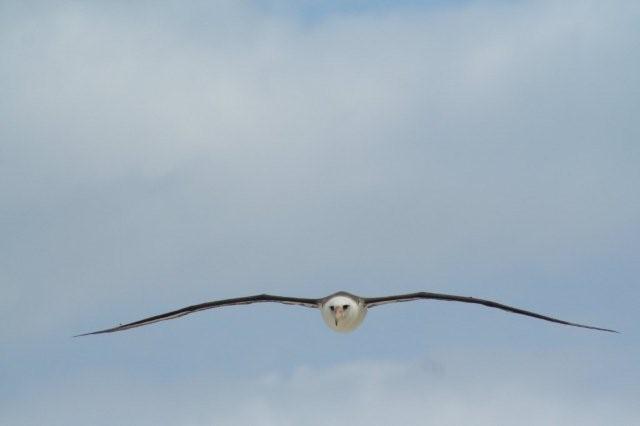
Easy for Fred this year. Gotta help friends, Albatross out on Pihemanu.
All Fred Penny go to:
FRIENDS OF MIDWAY!!!!
to help them make better habitat for albatross babies
by pulling up all not native plant, Verbesina!
Hey! Check this out too!
Me, Fred, big fan of Etown on The Mountain 103.7
when I'm home with buddy Ron. He like listen to Vinyl Cafe, me, Etown...
They have this show about guy who start penny project
You go school?
Start penny collection in big clam shell or just a jar or maybe baseball hat.
Check out:
Penny Harvest at:
You might just help someone need help!
Make people and albatross smile!
12 December 2009
FRED THE WILDLIFE WARRIOR

Yippee! It's me, Fred the Monkey Wildlife Warrior
Here at Steve Irwin's Place.
You know, Steve, he helped so many animals,
not just find homes, but be in our mind
and in best place,
HEART.
Fred love Steve and Family!
Will always keep Steve in heart of Fred.
Make Warrior Pledge:
Me, Fred the Monkey
Promise to help all animal of earth,
even down here under rest of world.
Gotta go find out more about Penguin in big trouble.
You know any artist draw good Crested penguin for Museum?
11 December 2009
CROCODILE FREDDIE

Turns out Fred was originally cast to be the star
of
Crococile Dundee.
Go figure.
So it was with a lot of good memory he paid a visit
to Steve Irwin's place to visit the Salties.
Fred says some of the big Salties are 20 feet long.
Might live to be 100.
They might even be able to get by for an entire year on one meal.....
A big meal.
This is somethig Fred knows, so he can hop on a croc
while showing
NO FEAR.
Fred has a lot of respect for Steve and family and all Aussie friends.
Says he might just stay down under for a spell.
Rains have come to quench some of the thirst of dry lands.
And, surf is up along the Sunshine Coast!
but how does he get down off that snout?
Stay tuned.
08 December 2009
DOWN UNDER FRED INTERVIEW
Fred is getting around down under and has even been revealing a great deal about his life.
Check out a recent interview in Queensland at: http://ausmepa.blogspot.com/
Check out a recent interview in Queensland at: http://ausmepa.blogspot.com/
03 December 2009
GOTTA KEEP THEM SOARING

I received a box in the mail today.
From the USFWS.
Many of you don't know them.
They are mainly biologists working so hard to protect endangered species.
Wolf. Grizzly. Eagle. Polar Bear.
They also work to protect habitat of species not yet officially listed
as endangered.
Out in the middle of the Pacific Ocean,
a few of them work to protect and understand a complex set of problems
generated here on the mainland.
One of the most serious concerns how our plastics enter the ocean
enter and kill some of the most magnificent creatures ever to soar.
I took this photo at a place of importance.
A burial site for albatross on Pihemanu, aka Midway Atoll.
Here, I saw hundreds of dead albatross.
My friends along that day were equally moved and saddened.
Every dead albatross was filled, as this bird was, with plastics
that included toys, markers, lighters, toothbrushes, and more
bottle caps
than we could possibly count in a week.
You are seeing one bird.
Millions of seabirds that we know of die each year by plastic ingestion.
In the case of albatross, the parent birds pluck the plastic from the sea.
They are adapted in a way curious perhaps.
Adaptation is like that.
They soar.
Then they alight on the water.
They pluck flying fish eggs and squid from the water.
Then, they fly maybe 500 miles back to their nesting island to feed baby.
Trouble is, they mistake plastic for the natural food and feed the deadly brew to
baby albatross.
Baby albatross like the dead one above must regurgitate
what biologists call a bolus (like an owl pellet)
at least once before fledging (flying off island to join other subadults on the sea).
Sadly, plastics often pierce their stomach.
Or, the plastics are so much a part of the contents of the stomach,
they can not toss it up.
I watched them die from this.
I wanted to add this photo well before Christmas
and will add far more after the New Year
mainly to help us to remember why we ought to be concerned
about the ocean.
We owe it to the little albatross to save our oceans.
Climate change is one thing, plastics seems another, but connected.
Reduce use of plastics and you will certainly save seabirds.
Reduce co2 emissions and you will save their habitat too.
So much to do!
You can help by supporting the USFWS and organizations
linked to this site. Unlike others, we at SOAR do not ask for your money,
we ask for your thoughtful consideration of the way we all live.
Send money to groups doing good work, but begin at home
Go plastic free this Friday for a start?
Mahalo nui loa
02 December 2009
BABY RED-FOOTED BOOBY

What could be more beautiful than a baby Red-footed Booby.
I photographed this one on Eastern Island, Pihemanu (Midway Atoll).
It is testing its wings as winds blew across the tiny island from the lagoon.
Soon, it would fly off on its own to feed in its characteristic and spectacular fashion.
Unlike the Albatross, Boobies dive from the air, piercing the water, then grabbing
a fish before emerging and flying off, quite a ways from initial plunge.
You can see them dive if you watch the water from the shores of Kauai
and Oahu.
You can see them nesting along with many other seabirds at
Kilauea National Wildlife Refuge on Kauai.
Boobies, Frigates, Albatross, Nene, Shearwaters, Monk Seals, and Honu
can be seen up close here.
All winter, Humpbacks swim offshore of the lighthouse
and Spinner Dolphins swim past pretty much all year.
Opportunity to photograph courtesy, NOAA, USFWS, and
the State of Hawaii.
Thank You Papahanaumokuakea Marine National Monument!
Subscribe to:
Posts (Atom)


 Posts

